Annual Conference (ESSC)
10 editions across Europe since 2017, the largest European gathering of scholars and practitioners working on security issues.
Founded in 2017, the European Initiative for Security Studies (EISS) is a Europe-wide, multidisciplinary network of scholars working to consolidate security studies across the continent. It is independent and scholar-led: EISS builds the field and takes no partisan position on the questions its members study. It hosts the annual European Security Studies Conference (ESSC) and is a founding member of the COST Action NetSec, a wider partnership of a dozen institutions across the continent whose leadership is largely drawn from the EISS community.
The annual conference, the COST Action NetSec, training for early-career researchers, periodic surveys and a rolling calendar of network events.
10 editions across Europe since 2017, the largest European gathering of scholars and practitioners working on security issues.
A four-year COST Action (2025 - 2029) of twelve partner institutions, EISS among the founding members, addressing the fragmentation of Europe's security-studies base.
The NetSec Early-Career Scholars Summer School and Euro-SWAMOS train PhD students and early-career researchers in security and strategic studies.
The Global Risks to the EU expert survey, the Coercive Statecraft programme, and rolling roundtables on critical issues in European security.
A 90-second montage set to music, with no speech, from the 2025 conference at the University of Macedonia in Thessaloniki: the lecture theatre before the opening, participants talking over coffee, full panel sessions with speakers at their microphones, a researcher presenting a poster in the corridor, and the certificate of the European Security Studies Best Paper Prize.
Prior to EISS, the field of security studies in Europe was fragmented, insofar as there was no European forum capable of bringing together scholars and fostering exchanges among researchers and academics. EISS aims to overcome this fragmentation by federating and consolidating a truly Europe-wide field of security studies.
The Initiative was created in 2017 with two founding objectives, both explicit in the inaugural-conference proceedings: build the European academic network in security studies, and create a forum for joint research projects across institutions.
EISS began in 2017 within the AEGES association and became a standalone non-profit under the French loi 1901 in 2021, with its registered office at CERI, Sciences Po. The 2017 founding remains the reference date. Declared to the Préfecture de Paris on 29 November 2021 (Journal officiel, 7 December 2021, no. W751263001).
Through the Annual ESSC and standing thematic sections where scholars present in-progress work, not finished papers, to develop the field as it forms.
The ESSC is a place for new ideas and for research partnerships across institutions. It is not a paper-reading conference.
Several European associations already cover International Relations broadly: the European International Studies Association (EISA), the ECPR's Standing Group on International Relations, the Nordic International Studies Association (NISA), the Central and Eastern European International Studies Association (CEEISA). None are dedicated specifically to security studies. EISS exists to fill that gap and to consolidate a European community of scholars in the field.
EISS is multidisciplinary (historians, political scientists, economists, geographers, anthropologists, sociologists, and legal scholars) and open to early-career researchers, armed-forces and diplomatic-service members, and civil servants alongside academics. The Annual Conference rotates through a different European country each year.
The inaugural EISS conference organised papers around nine permanent thematic sections, still tracked today through the ESSC programme. The list expands as participating universities propose cross-cutting themes. Alongside the permanent sections, every ESSC has open panels, proposed afresh each year by the community.
Recent open panels have ranged widely:
The Annual ESSC is EISS's flagship gathering, the largest European meeting of scholars and practitioners working on security issues. The conference moves to a different European city and host institution each year. Editions since the 2017 inaugural at Université Panthéon-Assas:
 Stockholm
 Thessaloniki
 Prague
 Barcelona
 Berlin
 Lisbon
 Paris
Paris
Paris
Paris
Paris
Paris
NetSec is a four-year European Cooperation in Science and Technology (COST) Action launched in 2025 by 12 partner institutions (EISS among the founding members), to address the fragmentation of the continent's intellectual and analytical base in security studies through policy workshops, summer schools, and conferences. Much of NetSec's leadership sits within, or has long been associated with, the EISS community.
The network of researchers EISS convenes runs far beyond the 23 people on the EISS board. Through NetSec it now reaches 49 Management Committee members in 30 countries. Because NetSec is COST-funded, all its events are free and open to anyone working in or alongside European security studies. No membership is required.
EISS people leading NetSec
Almost everyone steering NetSec also sits on the EISS board.
 Action Chair · WG1 Lead
Dr Moritz WeissEISS board
Action Chair · WG1 Lead
Dr Moritz WeissEISS board
 Action Vice-Chair
Dr Marie RobinEISS board
Action Vice-Chair
Dr Marie RobinEISS board
 WG2 Lead
Dr John N.T. HelferichEISS board
WG2 Lead
Dr John N.T. HelferichEISS board
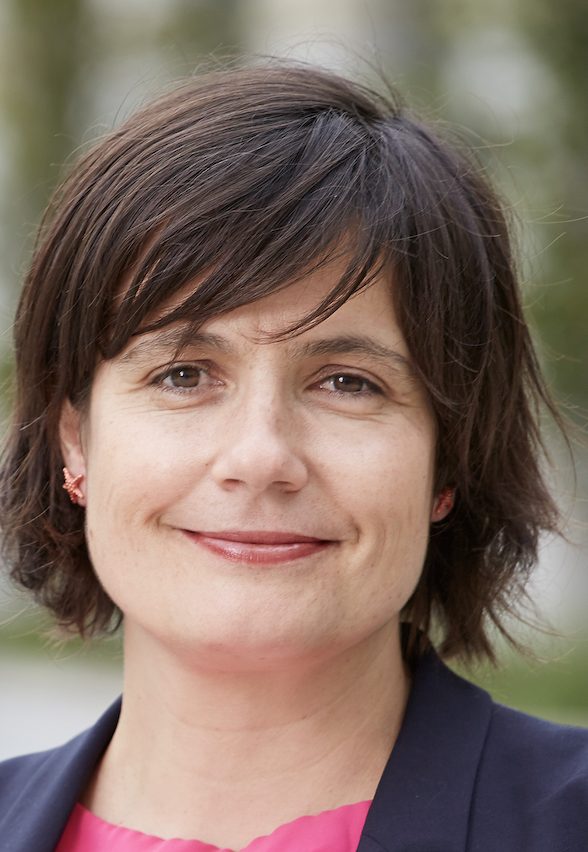 WG3 Lead
Prof. Chiara RuffaEISS board
WG3 Lead
Prof. Chiara RuffaEISS board
 WG4 Lead
Prof. Revecca PediEISS board
WG4 Lead
Prof. Revecca PediEISS board
 WG1 Co-lead
Prof. Filip EjdusEISS board
WG1 Co-lead
Prof. Filip EjdusEISS board
 WG2 Co-lead
Alisa KerschbaumEISS board
WG2 Co-lead
Alisa KerschbaumEISS board
 WG3 Co-lead
Prof. Silvia D’AmatoEISS board
WG3 Co-lead
Prof. Silvia D’AmatoEISS board
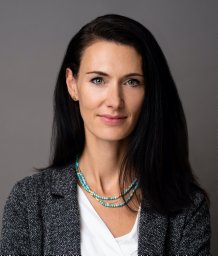 WG4 Co-lead
Sarka KolmasovaEISS board
WG4 Co-lead
Sarka KolmasovaEISS board
 Grant Awarding Coordinator
Dr Eliza GheorgheEISS board
Grant Awarding Coordinator
Dr Eliza GheorgheEISS board
 Grant Awarding Co-lead
Dr Chiara LibisellerEISS board
Grant Awarding Co-lead
Dr Chiara LibisellerEISS board
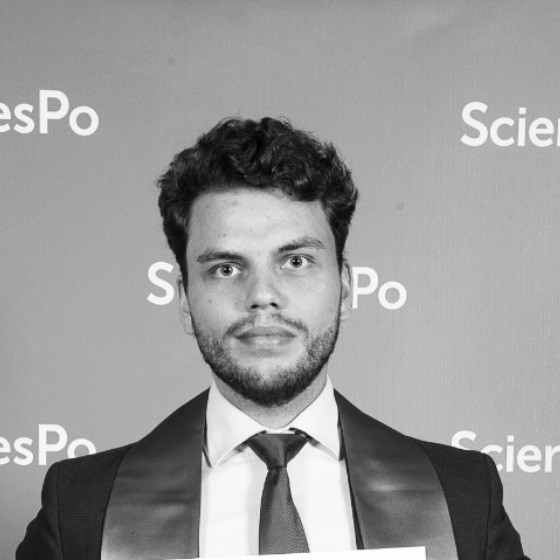 Science Communication Coordinator
Eugenio SanchezEISS support team
Science Communication Coordinator
Eugenio SanchezEISS support team
EISS was founded in 2017 by Hugo Meijer as a European extension of the French academic association AEGES, where he led international research partnerships. The inaugural conference at Panthéon-Assas in January 2017 (see the panel) gathered around 100 scholars from 62 universities across 15 European countries.
EISS is now an independent Europe-wide network with a board and community spanning 12 countries. It is open across theoretical approaches and disciplines, and welcomes scholars at every career stage. 10 editions of the ESSC have followed the 2017 founding, rotating through host countries across the continent. In 2025 EISS joined eleven other institutions as a founding member of the COST Action NetSec, formalising the network's role as one of Europe's main convening bodies in security studies. AEGES remains a sister organisation in France.
The network's own outputs: the book series, policy briefs, white papers, and survey results. This catalogue is being assembled.
Distinct from the network's own publications above, these are recent works our board and community members have published in their own right.
From members' public ORCID records. Members who add their ORCID iD to the directory form are listed here.