European Initiative for Security Studies · NATO Defense College ·
Vrije Universiteit Brussel — Institute for European Studies.
Theme
Intra-Alliance Challenges to NATO’s Cohesion and European Security
The European Initiative for Security Studies (EISS), NATO Defence College and the Institute
for European Studies at Vrije Universiteit Brussel organised a policy workshop on
“intra-alliance challenges to NATO’s cohesion and European security”.
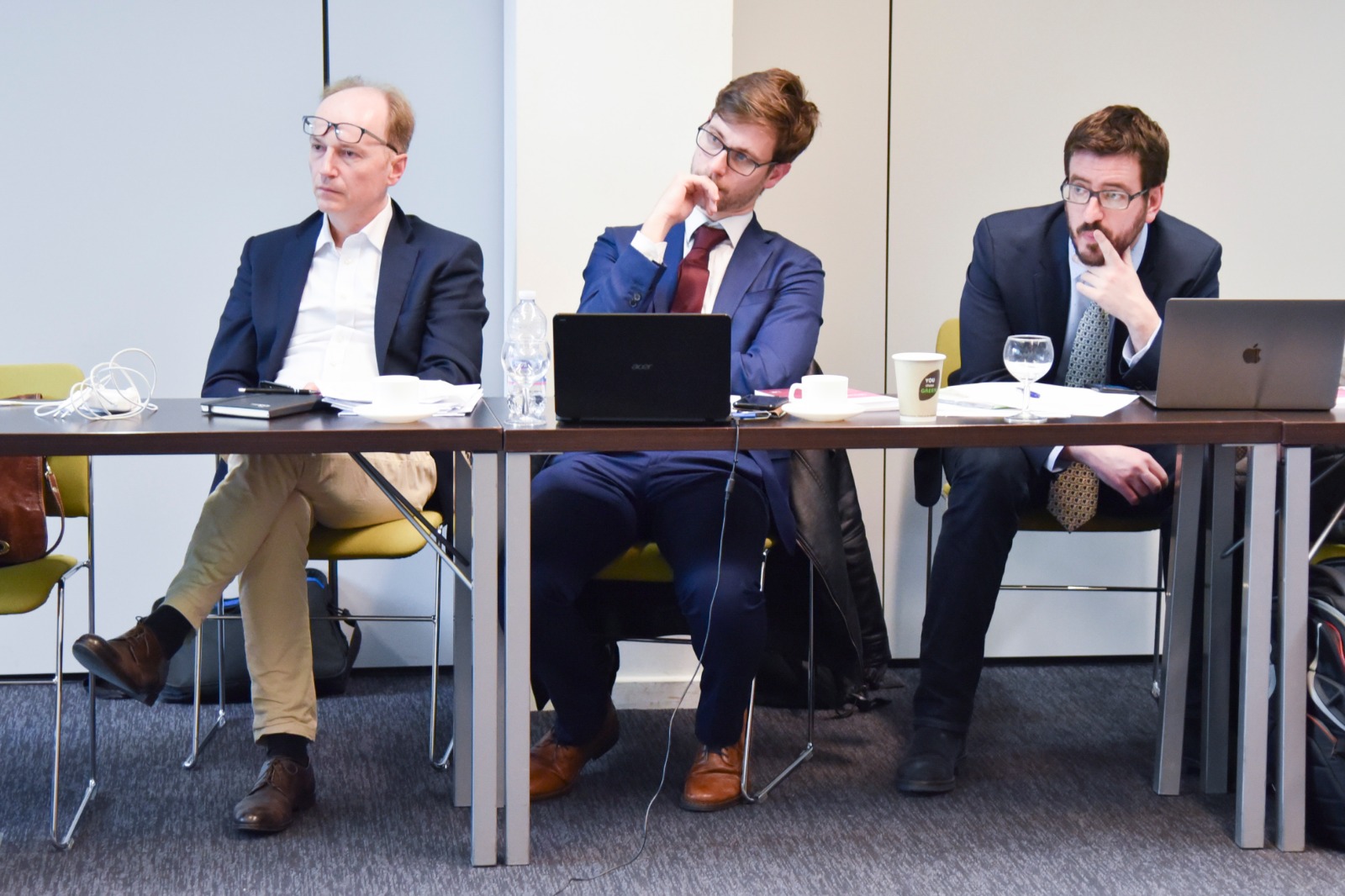
This workshop brought together academics and practitioners, to examine how thinking within
NATO is developing.
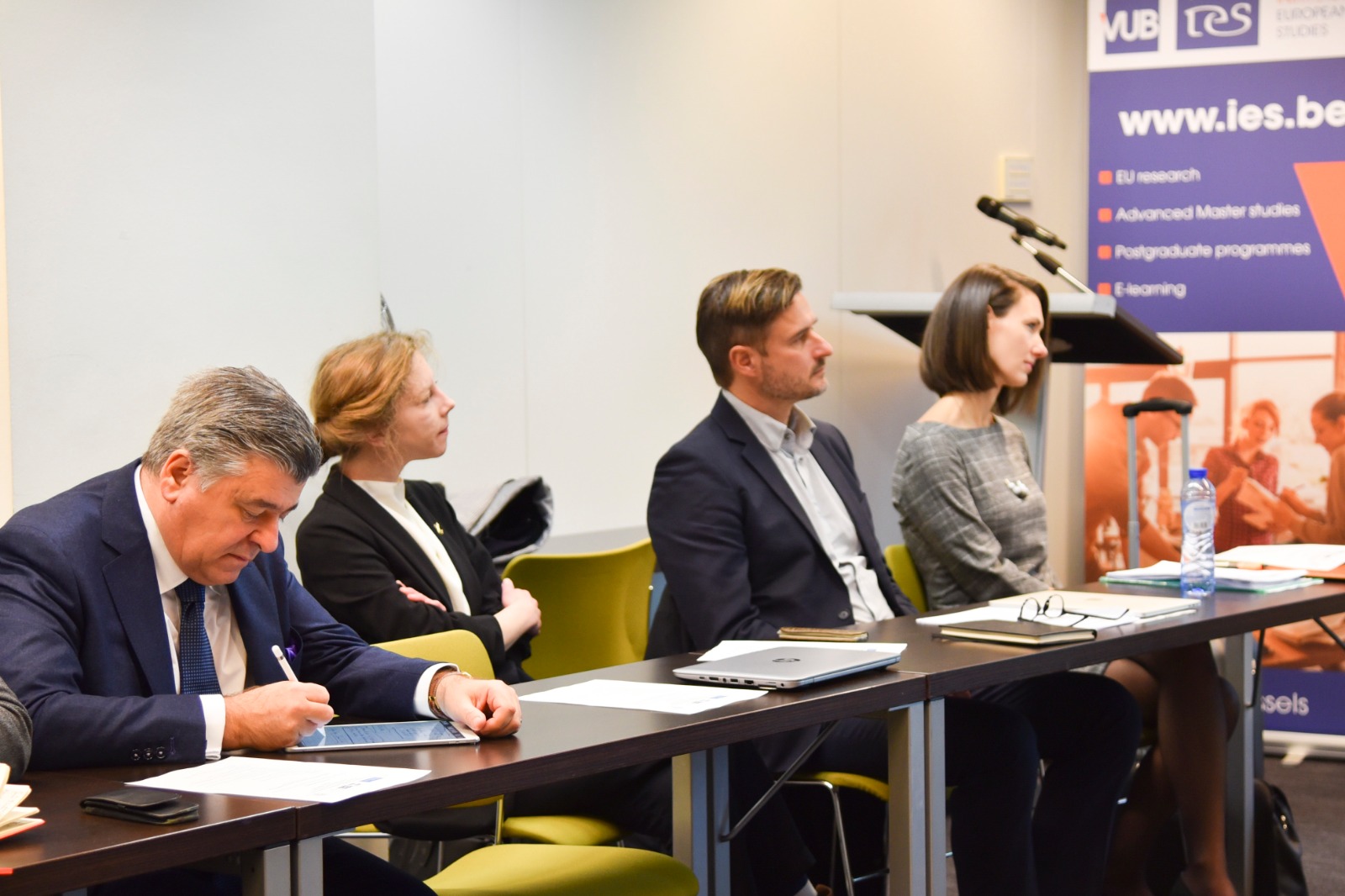
It was hosted at the Institute for European Studies of Vrije Universiteit Brussel.
Established and emerging academics, as well as NATO and EU policymakers were invited to
moderate the panels and participate in the discussions.
From the archive
Conference programme
The full programme of panels, roundtables and papers, as it ran. Open a session to see its papers and speakers.
Presenter
Friday 22 November 2019
08:45
Registration
09:00
Welcome Remarks
Chair:Luis Simon (Vrije Universiteit Brussel, Brussels), Hugo Meijer (Sciences Po, Paris), Thierry Tardy (NATO Defense College, Rome)
09:15– to 11:00
Session I
Chair:Hugo Meijer (Sciences Po, Paris)
Discussants:Benedetta Berti (NATO HQ, Brussels)
View papers (3)
NATO disagreement on threat perception and strategic priorities
Presenter: Wojciech Michnik (NATO Defense College, Rome)
NATO's 360o approach reflective of internal division
In June 2015 NATO defence ministers affirmed the Alliance's ability to provide a “360-degree approach” to deter threats and defend allies, a concept confirmed at the 2016 Warsaw summit as the Alliance faced both a resurgence of Russian assertiveness on its eastern border and terrorism to its south. The resulting disputes over adaptation are often read as signs of growing, irreconcilable dissension between allies, or even as predicting NATO's obsolescence. Drawing on a sociological analysis of NATO's internal dynamics — five months of participant observation within the Alliance, around a hundred interviews with civilian and military officials, an ethnographic notebook and archival work analysed through process-tracing — this paper argues that consensus among almost thirty allies can nonetheless produce positive outcomes that realistically rebalance the Alliance's posture. It first sets out the diverging threat perceptions within the Alliance and the bridging attempt in the Warsaw Communiqué, then examines the implementation of the “360-degree” concept through the adaptation of the command structure and the refocusing of NATO military activities, and finally offers an initial assessment of changes that orient the Alliance in an unbalanced, though realistic, direction.
Presenter: Mark Webber (University of Birmingham) · Jens Ringsmose (University of Southern Denmark)
Even though the US material commitment to European defence has been enhanced in recent years, President Trump's comments on NATO have cast doubt on the reliability of the Article V guarantee, and imply that American involvement in NATO peace-support or enforcement missions cannot be taken for granted. Junior partners confronted with the possibility of lowered commitment by the leading power have an incentive to ‘hedge’, and this paper examines three types of hedging behaviour pursued (or contemplated) by the European allies: incentivising the US to hold to its commitments through higher defence spending and an agenda oriented toward American priorities; strengthening bilateral ties to the US; and regionalisation, evident in accelerated EU security and defence initiatives. These strategies share the same logic — to prevent abandonment or deal with its consequences — and can introduce ‘horizontal’ tensions into relations between the European allies. The paper argues, however, that hedging remains limited in scope and ambition, a consequence of the allies' weak starting position in military capabilities, and is therefore not likely to undermine NATO; in fact it complements the Alliance, with even the EU's move toward greater ‘strategic autonomy’ calibrating well with the goals of NATO–EU partnership. While still nascent, hedging reflects a genuine European interest in responding to the ongoing shift of American strategic priorities away from Europe and towards China, and the paper concludes by considering options for strengthening NATO's European pillar.
President Trump has repeatedly stated that the United States would abandon NATO, yet outside analysts have few means of tracing the rationale behind such a choice. A better understanding of the past impulses underpinning Washington's behaviour towards the Alliance could help inform that debate, and to this end the paper seeks to explain why the United States favoured Poland, Hungary and the Czech Republic joining NATO in 1999. After the Cold War, many scholars thought Washington's desire not only to retain but to expand the Alliance puzzling; existing explanations emphasised personal beliefs, normative aspects, domestic politics, or hedging against Russia. Drawing on recently declassified American and British archives and numerous interviews with former officials, the paper finds these accounts insufficient and proposes instead that the Clinton Administration sought enlargement to safeguard European stability and enhance US influence over the continent, two goals deemed necessary for furthering US prosperity. Constructing its explanation inductively from thousands of declassified Bush-era documents and then testing it against Clinton-era evidence, the paper shows that a healthy, enlarged Alliance was seen as the best instrument to contain European instability and protectionism while sidestepping regional security mechanisms that could render NATO obsolete.
The Rise of Illiberalism and Potential Paths to NATO's Disintegration
Presenter: Tobias Bunde (Hertie School of Governance, Berlin)
13:15– to 14:00
Lunch break
14:00– to 15:45
Session III
Chair:Hugo Meijer (Sciences Po, Paris)
Discussants:Alexandre Monéger (NATO HQ, Brussels)
View papers (3)
Change in Burden-Sharing mind-set in NATO
Presenter: Dominika Kunertova (University of Southern Denmark, Odense)
Ambiguous American commitments to European security, Brexit, national populist forces and the lack of political leadership have put NATO under stress and challenged its cohesion, which represents the Alliance's centre of gravity. Counterintuitively, burden-sharing as a set of institutionalised cooperative practices can strengthen that cohesion, yet since the 2014 Defence Investment Pledge the debate has gone out of balance, focusing almost exclusively on the 2 percent of GDP spending figure and further polarising the allies. This paper re-examines the Alliance's philosophy of burden-sharing along the lines of Article 3 of the Washington Treaty, introducing a mutual-aid dimension into NATO's cash-capabilities-contributions framework to emphasise what member countries can do together rather than what divides them. Moving beyond defence accounting to the quality and effectiveness of burden-sharing, and stressing that allies cannot simply buy interoperability, it argues that a conceptually well-adjusted burden-sharing narrative can improve cohesion and enhance interoperability as the ability to act as a group, and concludes with recommendations for achieving greater cohesion and more interoperable armed forces.
Despite shared historical experience and cultural proximity, the Visegrad group (V4 — the Czech Republic, Hungary, Poland and Slovakia) struggles to institutionalise its cooperation through stable mechanisms ensuring internal cohesion and external credibility. This is especially evident in the field of security and defence, which requires a shared strategic vision, in particular common norms regarding the legitimate use of military force. While in the 1990s the four countries exhibited solidarity and unity in their collective ambition under the narrative of the ‘Return to Europe’, their general perception of security threats and their strategic cultures prevent deeper integration into a security community. Reviewing the leading norms that constitute the four states' foreign and security policies, this paper shows them to be not only dissimilar but often contradictory, a dissonance that fundamentally limits the security and defence potential of the grouping and hinders the V4 from becoming a recognised security community.
Presenter: Marc De Vore (University of St Andrews)
Although the share of European armaments produced collaboratively climbed steadily for five decades after 1949, it has remained flat at roughly a fifth of procurement for the past two decades, even as European states built ever more robust institutions: the European Defence Agency (2004) and the 2009 Defence and Security Procurement Directive. Beneath the aggregate figures lies a bifurcated reality: collaboration dominates some sectors, such as missiles and aircraft, while it has failed entirely to make inroads into others, such as armoured vehicles and warships. This paper advances a structural theory to explain why efforts to collaborate generate distinct outcomes in different sectors. Drawing on the management literature on joint ventures, it distinguishes the structural conditions that incentivise firms to cooperate from those that prevent them, arguing that sectors differ in their degree of “rivalness”. Collaboration is simplest when partner firms together occupy one market but otherwise operate in separate ones, since even a firm that loses relative capability to its partner can still gain by applying the shared knowledge to its other products; it is hardest when potential partners are rivals across their other product lines, leaving little room for win-win workshare compromises. It is thus a sector's structure that determines whether collaboration succeeds.
Citizens' attitudes to EDC in UK, France, and Germany
Presenter: Thomas Scotto (University of Strathclyde) · Konstantin Gavras (University of Mannheim)
The question of European aspirations for a defence autonomy distinct from NATO dates back to the European Defence Community proposed in the early 1950s, and recurs today as global tensions, questions about Russia's intentions, population displacements and doubts over the United States' commitment to NATO under President Trump have the French again pondering a new model for continental defence. There is scholarly debate over the role of public opinion in driving foreign policy, but Britain's vote to leave the EU should give leaders pause to consider their electorates before building an alternative to NATO. This paper examines the extent to which elite concerns over NATO are reflected in public attitudes in three major European states — the United Kingdom, France and Germany. Drawing on a unique set of YouGov surveys of the British, French and German publics conducted in 2019, it first compares support for NATO and for EU defence across the three nations, paying particular attention to whether the British public is an aggregate outlier, then probes the demographic and political undertones of the divide over NATO within Germany and France, and asks whether coherent segments of the public might form a basis for a European defence alternative. The British prove distinctly Atlanticist, while significant numbers of Germans and French are open to alternatives, a pattern with clear implications for the future of the Alliance.
Presenter: Jonas Driedger (European University Institute, Florence)
This paper assesses British-German security cooperation towards Russia as the linchpin of the European leg of NATO's policy. The departing United Kingdom is Western Europe's prime military power, while Germany, as the EU's economic powerhouse, has the most leverage to act as the hub of a joint Russia policy; the United Kingdom has long preferred an assertive line while Germany sought accommodation, so a British-German consensus becomes the linchpin of an effective and cohesive European policy towards the Kremlin. Against a notable consensus to the contrary, the paper shows that the Brexit process has thus far strengthened security cooperation on Russia, both between the United Kingdom and Germany and in Europe more broadly. It argues that bilateral security cooperation towards third states persists, even amid normative and institutional disintegration, when both states perceive the third state as a threat and deem each other reliable and capable: the 2014 Ukraine crisis facilitated converging threat perceptions between the two, while Brexit caused both sides to signal ongoing reliability. The paper also offers a novel conceptualisation of bilateral security cooperation into its constituent goals, strategies and efforts, and draws on British, German and Russian primary sources alongside expert interviews.