Next Annual Conference

European Security Studies Conference 2027

Jointly organised by the COST Action NetSec, the European Initiative for Security Studies (EISS), and the University of Belgrade, Faculty of Political Science.

10–11 June 2027 University of Belgrade, Serbia

206 days until ESSC 2027

Two events, back to back

EISS and the COST Action NetSec invite you to two events at the University of Belgrade, Faculty of Political Science.

European Security Studies Conference

10–11 June 2027. The tenth annual conference.

Call for panels, papers and posters

Panel, paper and poster proposals for the 10th European Security Studies Conference are open until 26 January 2027.

Submit a proposal on Indico Read the full call (PDF)

Three ways to take part

Panel proposals

An open panel: a panel title, a chair and four speakers. The chair is also the discussant.

Paper proposals

A paper for one of the pre-established closed panels below.

Poster proposals

For PhD and Master's students presenting early work. The abstract is up to 200 words.

Key dates

  1. Panel, poster and paper proposals due on Indico
  2. Decisions on open panels (organising committee) and on papers for closed panels (chairs)
  3. Final programme sent to participants
  4. Papers due to panel chairs for the Best Paper Prize
  5. Papers due to panel chairs

Closed panels

1. Non-Proliferation and Arms Control

This panel serves as a platform to present and discuss new research on arms control, disarmament, and the non-proliferation of Weapons of Mass Destruction (WMD). In light of Russia’s nuclear threats and uncertainties around Iran’s nuclear programme, the panel especially encourages submissions that focus on strategies and institutions to prevent the proliferation and use of nuclear weapons. The panel aims to bring into conversation scholars from different disciplines, such as political science, history, international law, and science and technology studies (STS), and seeks to facilitate a multidisciplinary dialogue on non-proliferation and arms control. Possible topics include, but are not limited to, the elements of the non-proliferation regime; the impact of sanctions on nuclear non-proliferation; international verification and international organisations; and the role of civil society in nuclear disarmament.

Chair: Eliza Gheorghe (Bilkent University)

2. Digital Transformations in the Information Age: Cyber, Digital, and AI

Digital technologies, such as artificial intelligence, cyber capabilities, and digital infrastructures (e.g. data centres, cloud computing infrastructure, undersea cables), have become increasingly entangled with our physical reality, confronting scholars with both novel questions and age-old debates. In our ‘information age’, the transformative potential of digital technologies introduces complex questions for both policymakers and academics. From the individual to the global scale, the tactical to the strategic levels, and the virtual to the physical realms, this panel explores: what are the global, political, social, legal, and economic dimensions and consequences arising from these developments? Encouraging a diversity of perspectives and approaches, this panel seeks proposals which may originate from different disciplines and can bring to bear a wide set of theoretical and methodological approaches.

Chair: Julia Carver (Leiden University)

3. War Abroad: Military Intervention, Assistance, and Peacekeeping

In an era marked by shifting global alliances, protracted conflicts, and emerging threats, the role of foreign military engagement is more complex than ever. This panel examines the evolving dynamics of military intervention, international assistance, and peacekeeping operations across the globe. Papers can explore the political, ethical, and strategic considerations behind intervention, from crisis response and coalition-building to post-conflict reconstruction and long-term peacekeeping. Papers will bring to bear a variety of theoretical approaches and methodological tools to address how states and relevant actors project power, offer support, and strive to maintain peace in volatile regions.

Chair: Chiara Ruffa (Sciences Po)

4. War and Strategy: Grand Strategy, Military Strategy, and Security Cooperation

This panel explores the evolving intersections between grand strategy, military strategy, and international cooperation in times of war, competition, and geopolitical tensions. It investigates how states conceptualise and implement strategy across different levels of conflict (from high-level national objectives to operational military planning) and how these strategic frameworks interact with, or resist, efforts at international collaboration. Topics include the theoretical foundations of grand strategy, case studies of strategic decision-making in historical and contemporary conflicts, and the role of alliances, coalitions, and institutions in shaping wartime outcomes. By rethinking how war is theorised and practised, this panel aims to deepen our understanding of strategic behaviour and the potential for cooperative security in a divided world.

Chair: Chiara Libiseller (King’s College London)

5. Autocratisation and Security Governance

This panel examines how security governance is reshaped during autocratisation and how it can be reclaimed during re-democratisation. Beyond institutional capture and misuse, we welcome studies of everyday security practices that narrow the space for political and economic competition. We also invite contributions analysing how, amid intensifying geopolitical competition, security logics spill over into other policy fields. Of particular interest is how security discourses feed affective polarisation, leading citizens to endorse restrictions on their own rights or on those of groups cast as threats, and at what point such consent turns from legitimate trade-off into an enabler of autocratisation. Empirical studies may address a variety of cases, including backsliding democracies, hybrid regimes and closed autocracies in Europe, as well as recent instances of re-democratisation. We particularly encourage conceptual work and research that connects literatures that rarely speak to each other: civil-military relations, policing and intelligence studies, comparative democratisation, and International Relations.

Chair: Sonja Stojanović Gajić (University of Rijeka)

6. Addressing Non-Traditional Security Challenges: Climate, Development, and Gender Dimensions

Security today extends far beyond the battlefield. This panel delves into the increasingly urgent and complex realm of non-traditional security challenges, focusing on the intersections of climate change, sustainable development, and gender dynamics. These issues are reshaping global security priorities, particularly in vulnerable and conflict-affected regions. However, they are also conditioning the policy agendas of powerful economic and global actors. Open to a variety of theoretical and methodological approaches, this panel will explore how these cross-cutting challenges impact stability, peacebuilding, and resilience. Key topics include the security risks of climate-driven displacement, the role of development in preventing conflict, and how integrating gender perspectives changes security policy and scholarly approaches to security.

Chair: Nicolas Blarel (Leiden University)

7. The Future of International Peace & Security Architecture

The UN Charter assigns primary responsibility for international peace and security to the Security Council. That assignment is now far from where capability is concentrated and where violence occurs. Regional organisations (EU, AU, ASEAN, OSCE, CIS, SCO, etc.), ad hoc coalitions (BRICS, MIKTA, etc.), private military companies, and technology firms perform functions the Charter did not foresee more than 80 years ago. States adopted the Pact for the Future in September 2024, but have left the Council’s composition and voting rules untouched. This panel discusses what peace and security governance has become in the 2020s, as formal reform remains frozen. Contributors will examine four dimensions, notably 1) the delegation of enforcement to regional and private actors, 2) the future of the UN-led peacebuilding missions, 3) the erosion of arms control instruments negotiated in the 1970s and 1980s, and 4) the normative claims advanced by states outside the P5. We invite papers that combine empirical work with theoretical argument, including single-country studies, comparative designs, and work on institutions and norms.

Chair: Nemanja Džuverović (University of Belgrade)

8. Security Beyond the State: Managing Transnational Threats and Vulnerabilities

Contemporary security challenges increasingly transcend national borders and traditional state-centred approaches to security governance. From geopolitical instability and technological disruption to economic interdependence and transnational threats, states, international organisations, private actors, and civil society face an increasingly complex landscape of risks and vulnerabilities. This panel examines how diverse actors and institutions respond to these challenges, focusing on the evolving dynamics of cooperation, competition, and governance across national, regional, and global levels. Drawing on a range of theoretical and methodological approaches, it seeks to advance our understanding of how transnational threats are identified, managed, and addressed in a changing global security environment.

Chair: John Helferich (University of Oxford)

Practical information

  • Each panel has four presentations of 10 minutes. The chair, who is also the discussant, gives 10 minutes of feedback, and about 40 minutes of questions from the audience follow.
  • Each participant presents one paper.
  • EISS and the University of Belgrade do not fund travel or accommodation, and applicants are advised to seek funding from their home institution. The COST Action NetSec offers a limited number of travel grants (flight and a daily allowance for three days) to active participants: say in your proposal if you would like to be considered. The organising committee contacts those who are eligible.
  • Participants in the NetSec Training School are reimbursed by the school.
  • The programme includes a keynote lecture and thematic roundtables, announced with the final programme.

Papers by PhD students and early-career scholars (up to three years after the PhD) are considered for the European Security Studies Prize, awarded with the Journal of Strategic Studies: €1,000 and a senior scholar's mentoring towards submission to the journal. To be considered, send the paper to the panel chair by the prize deadline above. The NetSec Training School runs alongside the conference.

Conference Chairs

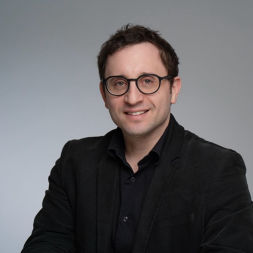
Prof. Filip Ejdus

Prof. Filip Ejdus

Professor of Security Studies

Faculty of Political Science, University of Belgrade

Dr Arthur PB Laudrain

Dr Arthur Laudrain

Team Lead and Senior Researcher

ETH Zürich, Center for Security Studies

University of Belgrade, Faculty of Political Science

Each year, the European Security Studies Conference is held in a different European country. The 2027 conference takes place at the Faculty of Political Science of the University of Belgrade, in Serbia.

Practical information

Supported by Horizon Europe

The Networking European Security Knowledge (NetSec) COST Action (CA24154) is supported by the Horizon Programme of the European Union.

Visit netsec-cost.eu

Funded by the European Union — Horizon Programme.